Pages

Showing posts with label Macro. Show all posts

Wednesday, 29 August 2012

Droplet

A drop or droplet is a small column of liquid, bounded completely or almost completely by free surfaces. A drop may form when liquid accumulates at the lower end of a tube or other surface boundary, producing a hanging drop called a pendant drop. Drops may also be formed by the condensation of a vapor or by atomization of a larger mass of liquid.


Monday, 6 August 2012

Cuckoo Bee


The Cuckoo Bee

The term cuckoo bee is used for a variety of different bee lineages which have evolved the kleptoparasitic habit of laying their eggs in the nests of other bees, reminiscent of the behavior of cuckoo birds. The name is technically best applied to the apid subfamily Nomadinae. Females of cuckoo bees can be easily recognized in almost all cases, as they lack pollen collecting structures (the scopa) and do not construct their own nests. They often have reduced body hair, abnormally thick and/or heavily sculptured exoskeleton, and saber-like mandibles, though this is not universally true, and other less visible changes are common, as well. 
They typically enter the nests of pollen-collecting species, and lay their eggs in cells provisioned by the host bee. When the cuckoo bee larva hatches it consumes the host larva's pollen ball, and, if the female kleptoparasite has not already done so, kills and eats the host larva. In a few cases where the hosts are social species (e.g., the subgenus Psithyrus of the genus Bombus, which are parasitic bumble bees that infiltrate nests of non-parasitic species of Bombus), the cleptoparasite remains in the host nest and lays many eggs, sometimes even killing the host queen and replacing her - such species are often called social parasites, though a few of them are also what are referred to as "brood parasites."
Many cuckoo bees are closely related to their hosts, and may bear similarities in appearance reflecting this relationship. This common pattern gave rise to the ecological principle known as "Emery's Rule". Others parasitize bees in different families, like Townsendiella, a nomadine apid, one species of which is a cleptoparasite of the melittid genus Hesperapis, while the other species in the same genus attack halictid bees.

Reference From Wikipedia, the free encyclopedia


Thursday, 14 June 2012

Robber Fly @ Asilidae


   Insects in the Diptera family Asilidae are commonly called robber flies. The family Asilidae contains about 7,100 described species worldwide.

   All robber flies have stout, spiny legs, a dense moustache of bristles on the face (mystax), and 3 simple eyes (ocelli) in a characteristic depression between their two large compound eyes. The mystax helps protect the head and face when the fly encounters prey bent on defense. The antennae are short, 3-segmented, sometimes with a bristle-like structure called an arista.

   The short, strong proboscis is used to stab and inject victims with saliva containing neurotoxic and proteolytic enzymes which paralyze and digest the insides; the fly then sucks the liquefied meal through the proboscis. Many species have long, tapering abdomens, sometimes with a sword-like ovipositor. Others are fat-bodied bumblebee mimics. Adult robber flies attack other flies, beetles, butterflies and moths, various bees, ants, dragon and damselflies, Ichneumon wasps, grasshoppers, and some spiders.

Tuesday, 15 May 2012

Dragonfly


   A dragonfly is a double winged insect belonging to the order Odonata, the suborder Epiprocta or, in the strict sense, the infraorder Anisoptera (from Greek ανισος anisos, "uneven" + πτερος pteros, "wings", due the hindwing being broader than the forewing). It is characterized by large multifaceted eyes, two pairs of strong transparent wings, and an elongated body. Dragonflies are similar to damselflies, but the adults can be differentiated by the fact that the wings of most dragonflies are held away from, and perpendicular to, the body when at rest. Dragonflies possess six legs (like any other insect), but most of them cannot walk well. Dragonflies are some of the fastest insects in the world. 


   Dragonflies are valuable predators that eat mosquitoes, and other small insects like flies, bees, ants, wasps, and very rarely butterflies. They are usually found around marshes, lakes, ponds, streams, and wetlands because their larvae, known as "nymphs", are aquatic. Some 5680 different species of dragonflies are known in the world today.


Saturday, 12 May 2012

Treehopper

 Treehoppers (more precisely typical treehoppers to distinguish them from the Aetalionidae) and thorn bugs are members of the family Membracidae, a group of insects related to the cicadas and the leafhoppers. About 3,200 species of treehoppers in over 600 genera are known. They are found on all continents except Antarctica, although only three species are found in Europe.

   They are best known for their enlarged and ornate pronotum, which most often resembles thorns, apparently to aid camouflage. In some species, the pronotum grows to a horn-like extension, but even more bizarre and hard-to-describe shapes are also found.

   Thorn bugs, due to their unusual appearance, have long interested naturalists. Distinguishing males from females is accomplished only by looking at the male genitalia. Individual treehoppers usually live for only a few months, but they belong to a lineage that is at least 40 million years old.


Wednesday, 9 May 2012

Macrography

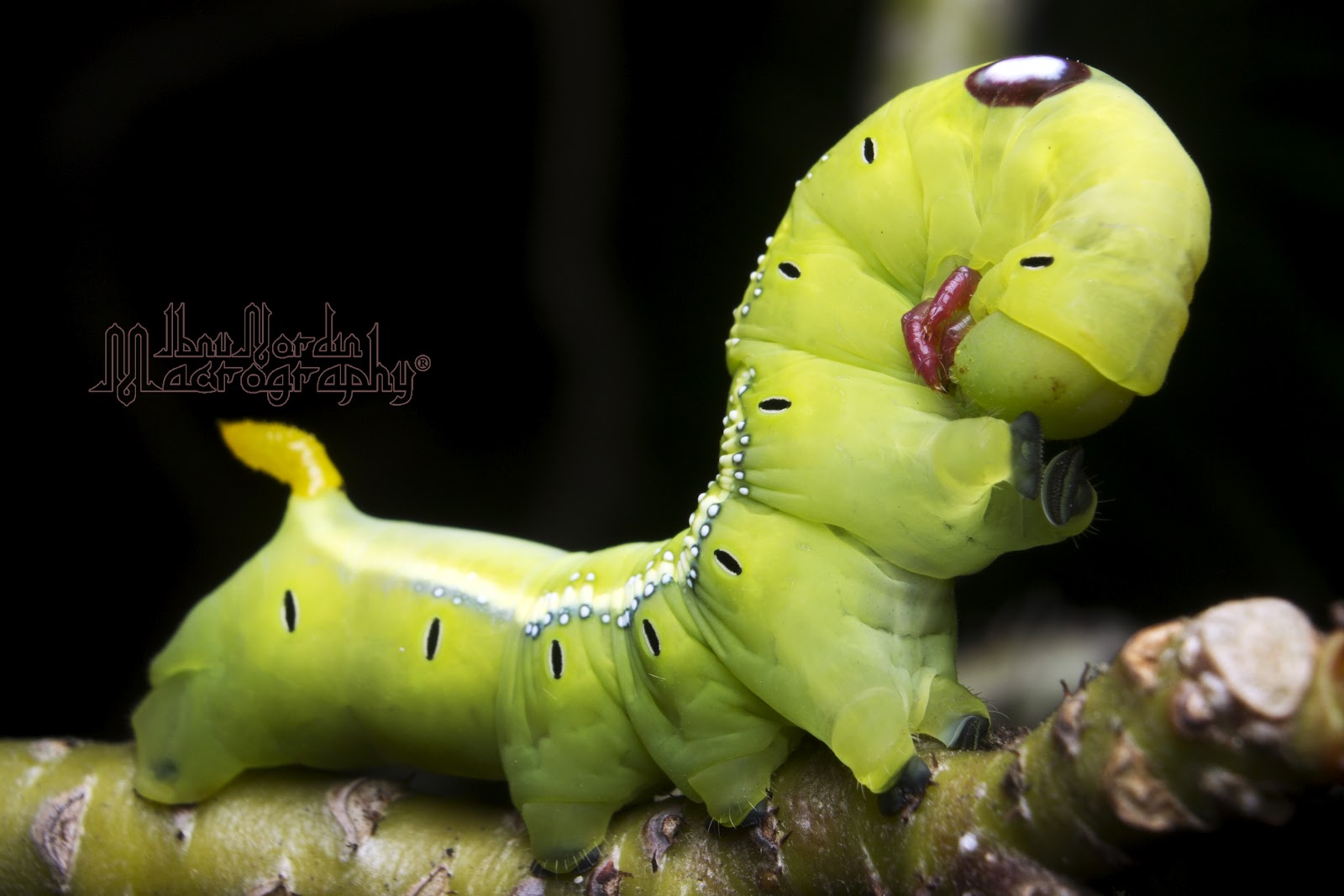
Caterpillar
Caterpillar

Caterpillar
Caterpillar

Damselfly
Damselfly

Dragonfly
Dragonfly

Jumper
Jumping Spider

Frog
Banana Frog

Hoverfly
Hoverfly

Ibnu Nordin Photog 2012 . All Right Reserved by BawahTanah®Group™Property